Kling 4.0 brings 30-second takes to AI avatar video
Kling 4.0 adds 30-second takes, 10 keyframes and up to 15 references. What it means for an AI avatar that talks to camera.
You have an AI avatar with a face people recognise, a voice that fits her, and a feed built on short clips. The weak spot is length: as soon as she has to talk through a full thought, you are stitching short generations together and hoping the face, the lighting and the lip-sync hold across the cuts. Kuaishou's Kling AI announced Kling 4.0 in a blog post dated September 30, 2026, and its headline feature is a single unbroken take of up to 30 seconds.
- Kling 4.0 generates video natively up to 30 seconds in one generation, aimed at long takes and continuous storytelling.
- Omni Reference accepts up to 15 reference assets per generation: up to 10 images, 5 videos (30 seconds in total) and 7 subjects, and a subject can carry a specified voice.
- Multi-keyframe control takes up to 10 keyframe images to set poses, expressions and story beats along the clip.
- Availability: Kling said on September 30 that Kling 4.0 was entering early access with a wider rollout in October, and that Kling 4.0 Flash would be available to Ultra Yearly subscribers from September 28.
Kling also lists more accurate lip-sync, two-channel stereo audio, targeted video editing and wider language support. Speech covers Chinese, English, Japanese, Korean, Spanish, Portuguese, German, French, Hindi and more, with American, British and Indian English accents and several Chinese dialects including Cantonese and Sichuanese. Two features in the announcement are explicitly marked coming soon: 10-bit HDR output at 4K and 1080p, and extending an uploaded video several times up to 2 minutes. Neither was available when Kling published the announcement.
For avatar creators, the length and the references matter more than the resolution. A 30-second take is long enough for a hook, a point and a sign-off in one breath, so there are no cuts where the face can drift. Omni Reference lets you pin the same person, wardrobe and voice into that take, and the keyframes let you plan where she turns, gestures or changes expression. Early hands-on testing of the Flash build by MindStudio, published October 2, reported that the lip-sync drift testers saw in Kling 3.0 over longer dialogue appeared largely fixed. The same testers noted that the early-access build was capped at 720p and that the model sometimes adds small actions nobody asked for.

How to plan an avatar take now that Kling clips run 30 seconds
The following images were generated using Nano Banana 2:
- Build a clean reference set first. Make one front-facing portrait in even light, plus two or three angles in the same outfit. These fill the image slots of Omni Reference and give the model one unambiguous face to hold for 30 seconds.
- Attach the voice to the subject. Kling 4.0 lets a subject carry a specified voice. Use the same voice every time, in the same language and accent, so your avatar sounds like herself across every post.
- Storyboard the beats as keyframes. Write the 30-second script first, then mark three to five moments where her pose or expression changes and make a still for each. You can use up to 10, but fewer, clearer keyframes are easier to direct.
- Fix, don't regenerate. If one expression or the background is wrong, use the targeted editing to change only that part. Kling says the rest of the scene stays stable, which saves you from rerolling a take that is 90 percent right.
Worked example — the reference portrait. A neutral, front-facing headshot in flat daylight is the anchor for every take: no strong shadows, no hands near the face, the same shirt she will wear on screen.

Prompt (Nano Banana 2, 1:1):
Front-facing reference portrait of an East Asian woman in her 50s with short silver hair, neutral relaxed expression, looking straight into the lens, even soft daylight, plain light grey background, head and shoulders visible, wearing a charcoal linen shirt, sharp natural skin texture with fine lines, editorial photography, no text, no logos.
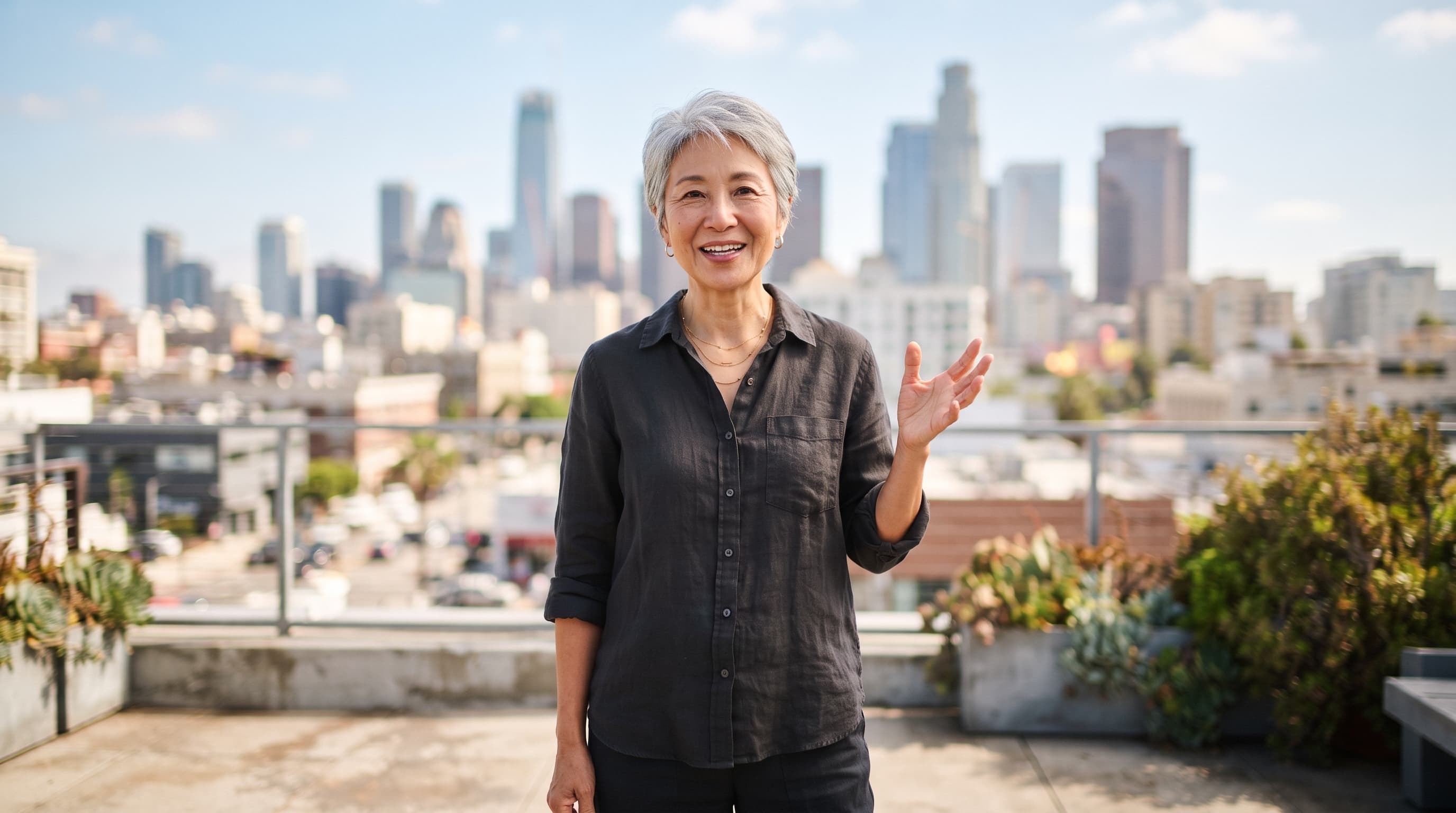
Worked example — a mid-take keyframe. This still sets a beat partway through the clip: she is walking on the rooftop, turns to the camera and lifts a hand to make her point. Give the model a few of these and the 30 seconds have a shape.

Prompt (Nano Banana 2, 1:1):
Editorial photograph of an East Asian woman in her 50s with short silver hair walking along a bright city rooftop terrace with potted plants, turning her head toward the camera mid-stride and smiling, one hand lifted as if making a point, wearing a charcoal linen shirt, late-morning sun, camera at chest height, well exposed, no text, no logos, no signs.
The honest take: the specs are strong on paper, but the early hands-on tests published in the first days of October used the lighter Flash build, at 720p. Testers flagged invented details and some drift in longer, complex generations, so review every take before it goes out. Plan around the features Kling describes as available, not around HDR or 2-minute extensions that are still marked coming soon.
Receipts: Kling AI, Introducing Kling 4.0 · fal, What is Kling 4.0? · MindStudio, Kling 4.0 First Look
The bottom line for AI avatar creators
Kling 4.0 changes the unit of work from a short clip to a full scene. If your avatar talks to camera, the combination of a 30-second take, a voice tied to the subject and up to 10 keyframes means you can deliver one complete thought without a single cut. That only pays off if your references are consistent, so the work that matters most happens before you open Kling: one locked face, one outfit, one voice.
If you don't have that identity yet, start with your avatar.
FAQs about Kling 4.0
How long can a Kling 4.0 video be?
Up to 30 seconds in a single generation, according to Kling's September 30 announcement. Extending a video several times up to 2 minutes is announced but marked coming soon.
Who can use Kling 4.0?
Kling said on September 30 that Kling 4.0 was entering early access with a wider rollout in October, and that Kling 4.0 Flash would be available to Ultra Yearly subscribers from September 28. Check your own Kling plan to see what you can use.
What is Omni Reference in Kling 4.0?
It is the way references go into a generation: up to 15 assets in total, made of up to 10 images, 5 videos with 30 seconds combined, and 7 subjects. A subject can include a specified voice.
Does Kling 4.0 output 4K HDR?
Kling lists 10-bit HDR at 4K and 1080p as coming soon. Early testers of the Flash build reported a 720p cap at the time of testing.
Is the lip-sync better than in Kling 3.0?
Kling says lip-sync accuracy is improved, and MindStudio's early tests of the Flash build found that drift over longer dialogue appeared largely fixed. Treat that as an early result until the full model is widely available.